
The short answer
Different businesses need different winners
A wholesale lead, a high-value repeat customer, and a shopper asking where an order is are all customer relationships, but they do not belong in the same workflow by default. Traditional CRMs organize pipelines and account work. Ecommerce help desks put orders and conversations in front of support agents.
Zoho CRM is the value-oriented sales choice. HubSpot offers the broadest approachable platform across sales, marketing, service, and data. Gorgias and Re:amaze fit support-led ecommerce teams. Salesforce makes sense when sales process, permissions, reporting, and customization have become a formal business system.
A useful decision rule
Name the team and the next action. If the daily work is answering order questions, start with a commerce help desk. If it is following deals and accounts, start with a sales CRM.
The shortlist
The best fits, by business situation
Best value for a configurable sales CRM
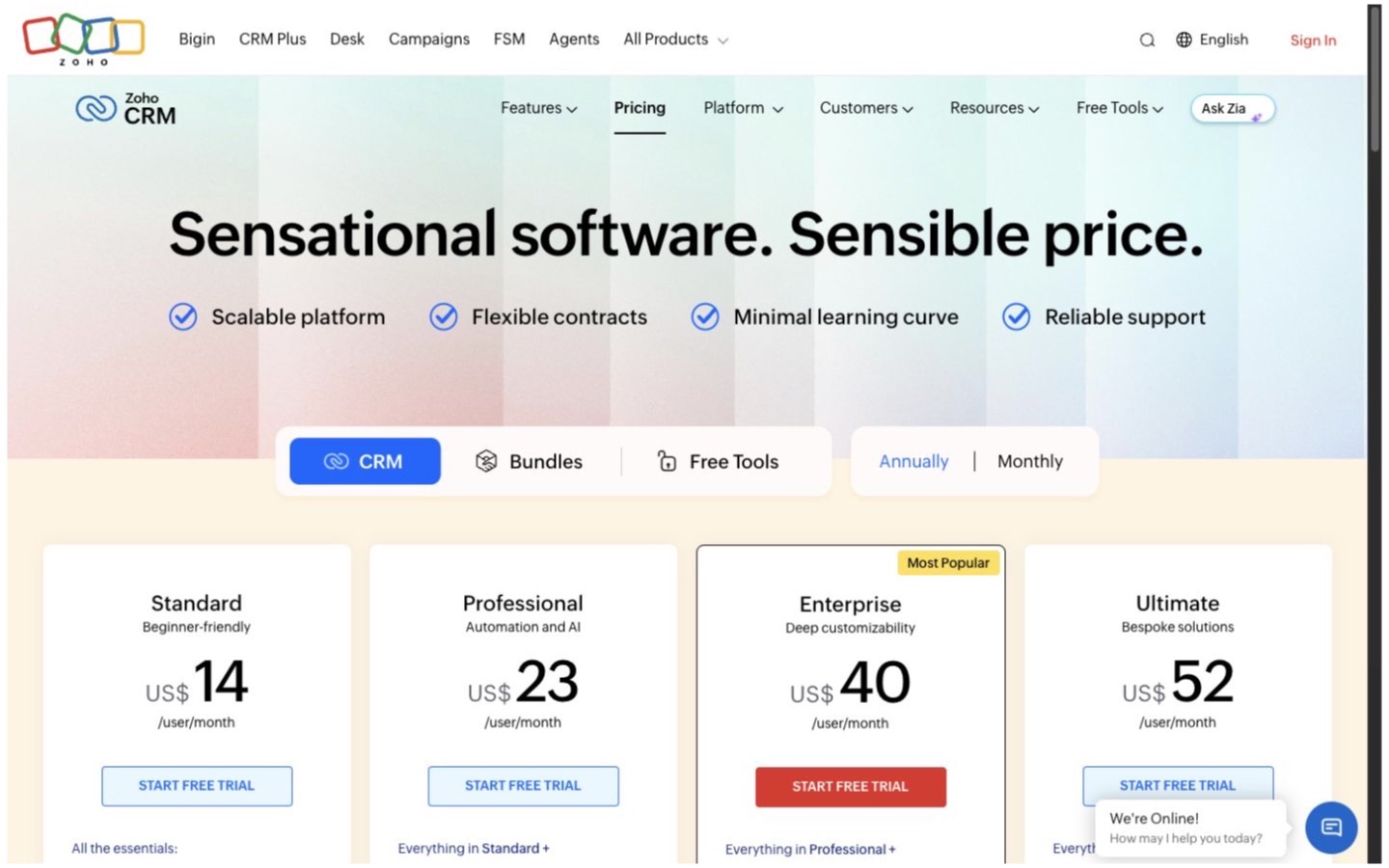
Zoho CRM
A small or midsize sales team that wants pipelines, automation, and the wider Zoho suite at a manageable entry point.
Why it made the list
Zoho CRM offers a conventional sales CRM with room to customize records, workflows, and connected business apps. It is a practical fit for a merchant building a B2B or wholesale sales process without starting at enterprise complexity.
The tradeoff
Flexibility can turn into clutter if fields and automations are added without an owner. Ecommerce connections may rely on Zoho apps or third-party integration choices.
What to verify
Build one real pipeline, import 50 clean contacts, connect a safe sample of store data, and have sales complete a full lead-to-order handoff.
Best broad platform for a growing go-to-market team
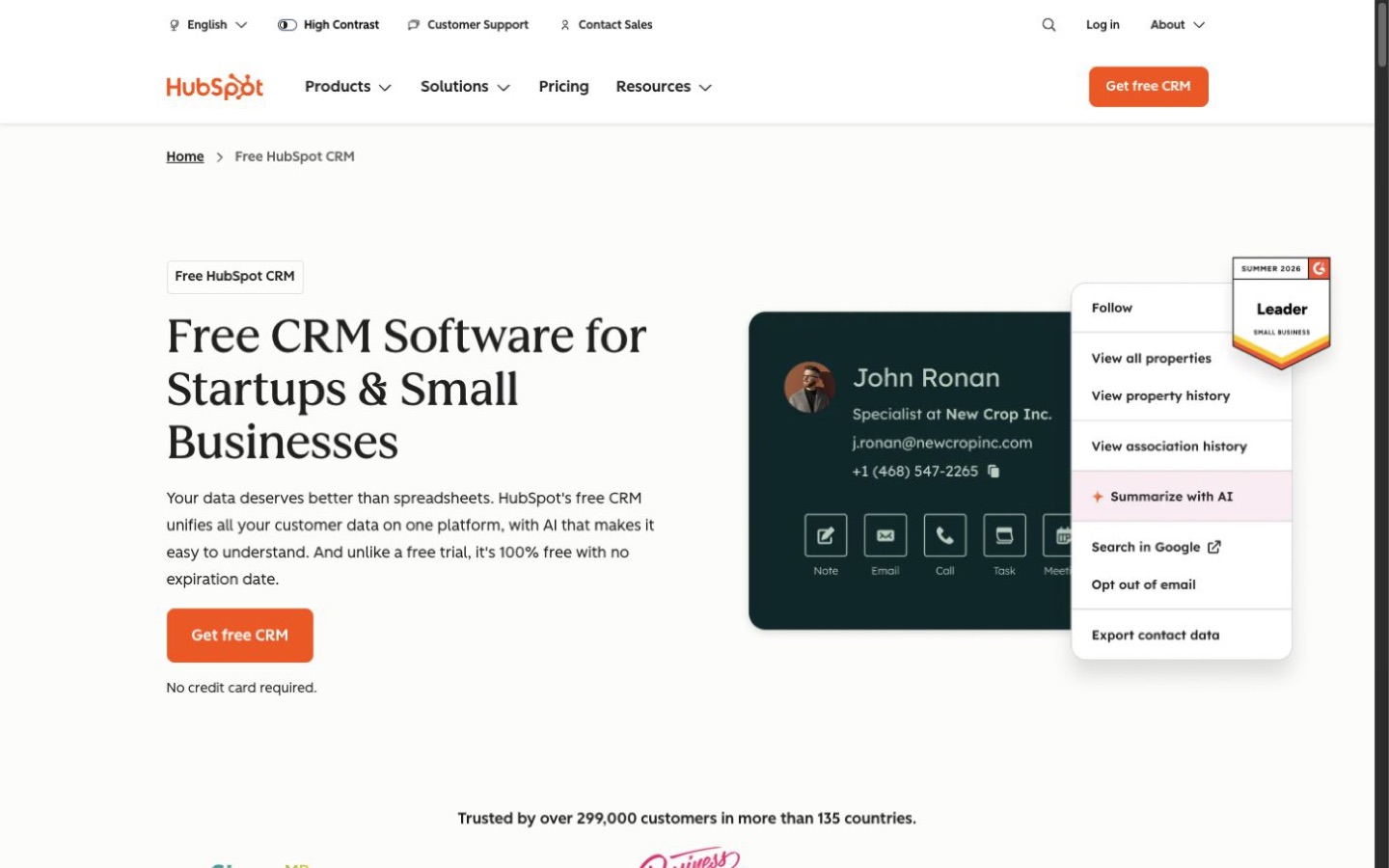
HubSpot CRM
A business that wants sales, marketing, service, content, and customer data to grow around one CRM record.
Why it made the list
HubSpot can start simply and expand into a much wider customer platform. That makes it useful when ecommerce is only one part of a business that also has salespeople, lead generation, service processes, and reporting needs.
The tradeoff
The bundle can become expensive and complicated as contacts, seats, hubs, and higher-tier features grow. Design the data model before buying several products at once.
What to verify
Price the 12-month setup with the expected contacts and seats, then test lifecycle stages, duplicate handling, consent, ownership, reporting, and Shopify data.
Best for a Shopify-centered support team
Gorgias
An ecommerce support team that needs order and customer context beside email, chat, and social conversations.
Why it made the list
Gorgias is not a traditional sales CRM, and that is exactly why it belongs here. For a store, the most valuable customer system may be the one that helps an agent understand an order and take a safe action without switching tabs.
The tradeoff
A support help desk does not replace a B2B pipeline or full marketing CRM. Ticket volume, automation, channels, and ecommerce actions affect fit and price.
What to verify
Replay common tickets—order status, address change, refund request, discount question, and damaged item—with real role restrictions and safe test orders.
Best for a smaller ecommerce support operation
Re:amaze
A lean team that wants shared inbox, chat, customer context, and ecommerce connections in one support workspace.
Why it made the list
Re:amaze offers a focused ecommerce customer-service approach that can be easier for a small team to absorb than a broad CRM suite. It is worth testing when support, not sales pipeline management, is the main job.
The tradeoff
A growing company may later need deeper workforce management, analytics, sales automation, or enterprise controls. Check plan limits and each channel the team actually uses.
What to verify
Connect test channels, measure a day of ticket handling, check collision and assignment behavior, and confirm what customer or order actions agents can take.
Best for a formal, complex sales organization
Salesforce Sales Cloud
A larger B2B or wholesale operation with defined roles, approvals, territory rules, customization, and reporting requirements.
Why it made the list
Salesforce belongs on the shortlist when CRM is a core operating platform with administrators and a serious implementation plan. It offers far more configuration than most small ecommerce teams need.
The tradeoff
Licensing is only part of the cost. Discovery, implementation, integrations, data cleanup, administration, training, and change control can dominate the budget.
What to verify
Require a prototype of the hardest process, a permission model, migration rehearsal, reporting pack, integration ownership, and a three-year operating estimate.
How to choose
Four questions that matter more than a feature count
Primary job
Sales pipeline, wholesale accounts, support conversations, retention work, or a deliberate combination.
Customer context
Orders, products, refunds, subscriptions, consent, conversations, and account relationships that staff can trust.
Ownership and permissions
Clear assignments, sensitive actions, audit needs, and access that follows each role.
Lifetime cost
Seats, contact or ticket volume, hubs, channels, implementation, integrations, and administration.
Cost
Price the working system, not the first subscription
Price the actual team, contacts or tickets, channels, automation, reporting, onboarding, integrations, and an internal system owner. CRM costs rise when bad data and unused fields are allowed to pile up.
Other credible options
Good products that did not get a main recommendation
Freshsales
A credible sales CRM, but Zoho and HubSpot cover the small-to-growing sales cases more clearly in this five-product shortlist.
View the profileBefore you commit
Run a small, reversible test
- Pick one sales or support workflow instead of testing every feature.
- Import a small, clean set of customers with consent fields preserved.
- Connect only the store data needed for that workflow.
- Have each role complete the work and test restricted actions.
- Check duplicate handling, reports, exports, and deletion rules.
- Measure time saved and write the adoption and rollback plan.
Editorial method
How this shortlist was built
Commerce Stack Guide defined the business situations and candidate group before considering affiliate relationships. We reviewed current official vendor pages, matched products to distinct operating needs, and kept tradeoffs and verification steps beside every recommendation.
This is source-based workflow analysis, not hands-on testing. Product limits and prices change, so the list is a starting point for a controlled trial—not a promise that one product will fit every store.
Sources