WooCommerce
Open-source ecommerce plugin for WordPress that gives merchants control over storefront, hosting, and extensions.
Last reviewed: 2026-07-22
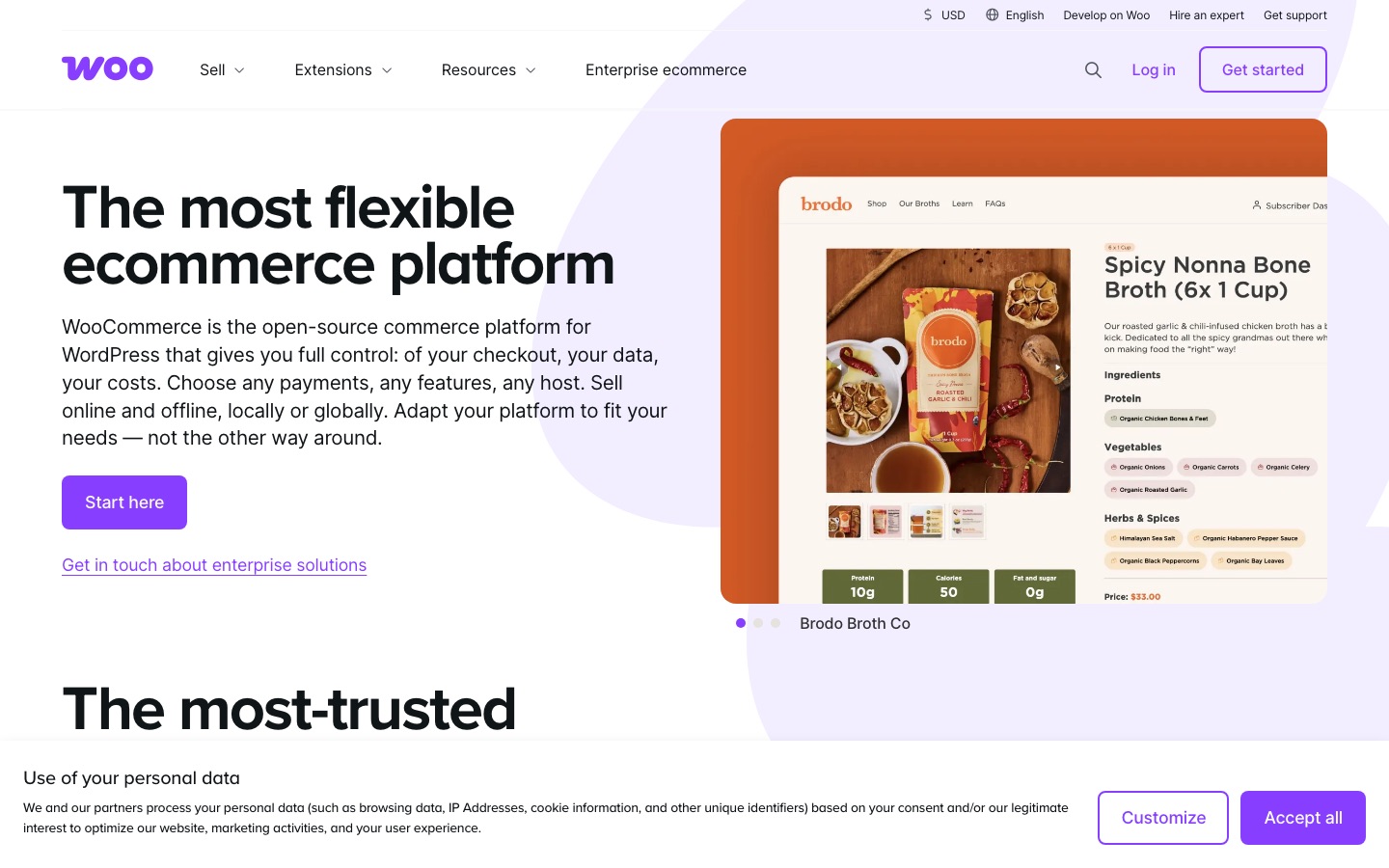
Overview
WooCommerce is the commerce layer inside a WordPress site, so products, checkout, orders, extensions, site content, and theme decisions share one operating environment. Hosting, infrastructure, security, backups, software updates, and specialist workflows such as advanced fulfillment or accounting remain the merchant's or service provider's responsibility.
Best for
WordPress-based merchants that want ownership, flexibility, and access to a broad plugin ecosystem.
Not ideal for
Teams that want a fully hosted commerce platform with minimal maintenance responsibility.
Implementation considerations
Review these dependencies before choosing a plan or committing to a rollout.
- 1Choose WordPress hosting that meets WooCommerce's current server recommendations before configuring products, payments, tax, shipping, and storefront design.
- 2Inventory the theme, extensions, payment methods, and custom integrations the store requires, then define who owns updates, backups, compatibility checks, and troubleshooting.
- 3Treat a move from another platform as a data and storefront project: catalog structure, customers and order history, URLs, design, and extension equivalents may each need separate migration work.
Key features
Integrations
Confirm current integration depth with the vendor before buying. Listed integrations are a starting point for research, not a complete implementation guarantee.
Pricing summary
Core WooCommerce is free and open source, but hosting, paid extensions, development, maintenance, and payment processing determine total cost.
What changes the total cost
- Hosting and infrastructure capacity, including performance, storage, backups, and traffic requirements.
- Paid themes, extensions, and third-party services added beyond the free core plugin.
- Development, migration, maintenance, security, and support work handled internally or by an agency.
- Payment processing and any usage-based services connected to the store.
Free trial
Not applicable
Free plan
Yes
Research sources
This profile is based on current vendor-published product, pricing, and help documentation. Commerce Stack Guide has not claimed hands-on testing of this software.
Pros and cons
Pros
- High flexibility
- Strong WordPress fit
- Large extension ecosystem
Cons
- Requires hosting decisions
- Maintenance responsibility is higher
- Plugin quality varies
Moderated user-submitted opinions
User reviews of WooCommerce
No reviews have been published yet. Submissions require sign-in and private human moderation before anything can appear here.
Write a review